What is a facelift?
A facelift is an operation which aims to correct sagging of the face and the neck, gradually restoring the contours to a more youthful-looking, rested appearance. It is not simply ‘tightening’ the skin; a modern facelift works on the deeper tissues of the face, where sagging actually begins over time. This means the results are not based on stretching the surface itself, but on genuinely restoring the underlying structure of the face.
This is why a well-performed facelift will produce natural-looking results. The face looks more rested, lighter and more like the person’s own. The result develops naturally over time, keeps your expressions looking completely natural, and offers a longlasting refresh.
Is it right for me?
A facelift may be the right choice when:
- There is visible sagging of the face or neck.
- Your skin has lost its elasticity.
- Non-surgical treatments are no longer enough.
- You are looking for long-lasting results.
- You want an improvement, without changing who you are.
The process
Planning
A personal assessment of your face, skin and goals, for a safe, natural-looking result.
Procedure
Targeted repositioning of the tissues and removal of excess skin, without over-compensating.
Recovery
Swelling settles gradually, the features soften, and you look more rested.
Progress
The result improves week by week, restoring natural contours and expression.
What is the right age for a facelift?
There is no ‘right age’ for a facelift. For many, there is a point when your face starts to look more tired than you feel inside – and for moist people this tends to happen around 50, some earlier, some later. What matters is not so much your age, but how your face actually looks – and just as important, how you feel when you look in the mirror.
A facelift starts to make real sense when changes appear that can no longer be corrected with non-surgical treatments. For example, when:
- the jawline loses its definition.
- the cheeks start to look ‘heavy’.
- the neck shows noticeable sagging.
- your overall expression constantly looks tired.
When a facelift is carried out in good time, before the sagging becomes very pronounced, the outcome is often more natural-looking and well balanced, and the results longer-lasting.
How is a facelift carried out?
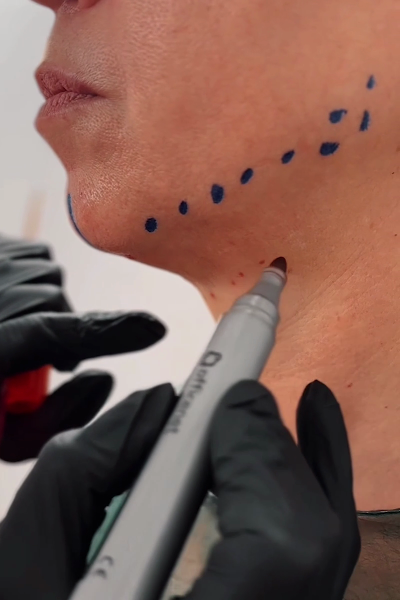
In modern surgery, a successful result is not based on stretching the skin itself but instead on restoring the deeper underlying structures of the face. That is why advanced techniques such as the SMAS facelift and the deep plane facelift are used, allowing the surgeon to work in the anatomical layers – the underlying areas where the sagging itself actually begins.
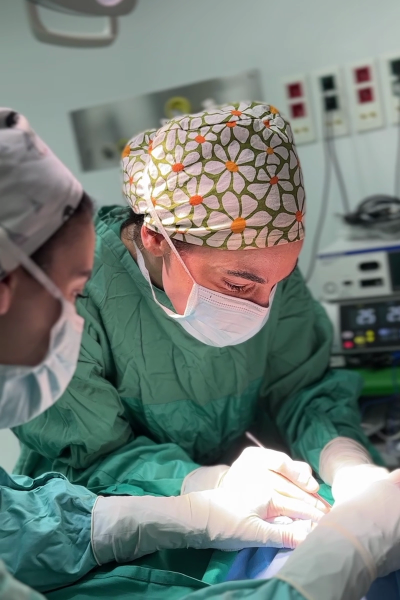
During the operation, the surgeon’s role is not just technical but both artistic and medical. With precision and respect for the tissues, the surgeon:
- repositions the deeper tissues of the face, where sagging actually begins.
- carefully removes excess skin, without over-compensating.
- places the incisions in discreet areas, so that they blend in naturally over time.
- shapes the contours in a way which preserves your expressions and a natural look.
Facelift vs non-surgical treatments
Many people come to the clinic having already tried anti-wrinkle injections (such as Botox), fillers and other anti-ageing treatments.
Non-surgical treatments have their place when sagging is still mild. Once sagging has progressed however, once the jawline has lost its structure and the tissues have moved downwards, injections and other treatments cannot meaningfully restore the contours.
A facelift returns the tissues to where they belong anatomically. That is why, for the right candidate, it offers something non-surgical methods cannot:
a genuine restoration of the contours, with a natural, long-lasting result.
Often, a well-planned facelift means fewer treatments are needed in the future, as opposed to more.
When does a result look unnatural?
Most people are not afraid of a facelift itself. They are afraid of an unnatural result – a face that looks ‘pulled’, with an altered expression.
An unnatural result usually happens when:
- the skin is pulled too tightly, rather than focusing on the deeper tissues.
- there is no individual plan for that particular face.
- the operation aims for a dramatic transformation, rather than a balanced and natural-looking outcome.
- the uniqueness of the patient’s individual features and expression has been ignored.
My philosophy for facelifts is exactly the opposite. Planning is based on natural anatomy, symmetry and how your face naturally moves. Lifting is done where it is needed, but only as much as is needed.
More about facelifts
BENEFITS
- Restores natural facial contours.
- A rested, lighter-looking expression.
- Improves sagging of the neck and cheeks.
- A natural look, without the appearance of having been operated on
- Long-lasting results.
AT A GLANCE
Procedure time
2–4 hours
Anaesthetic
Local or general
How long results last
Long-lasting
Recovery time
7–10 days
Hospital stay
1 day
Treatment areas
Face and body
Cost
From €150
Frequently asked questions
Will it be obvious that I’ve had surgery?
This is perhaps most people’s biggest fear. A well-planned, well-performed facelift should not “show”. The face should not look pulled or altered. Instead, it should look more rested, calmer and brighter.
Is a facelift painful?
In the first few days after the operation you may feel pulling, heaviness or mild discomfort – more like “tightness” than real pain. Most patients manage the discomfort with simple painkillers, and many describe the experience as milder than they expected.
How long do the results last?
The results of a facelift last for many years. It is not a temporary improvement, but a genuine restoration of the tissues.
Of course, natural ageing continues, as it does for all of us. But your face now ‘starts’ from a better position.
Will I have scars?
The incisions are carefully placed where they are naturally hidden: within the hairline, around the ear and behind it. For most people, the scars fade over the following months until they become hard to see.
Can it be combined with other procedures?
A facelift can be combined with eyelid surgery, fat transfer or other procedures when this makes sense for the overall result. The aim of combining procedures is a more complete, balanced appearance – always in moderation.
How long will it take me to get back to my normal routine?
You will need to rest for the first few days after surgery. Swelling and bruising are normal, and will settle gradually. Most patients return to light social activities within 10–14 days, while the appearance keeps improving for several weeks beyond. The final result does not appear straight away, but instead develops gradually and naturally, which helps the change seem natural and subtle to those around you.
Will my expression change?
No – and this is central to my philosophy. A good facelift does not take away your expressions or ‘freeze’ your face. Instead, it takes the tiredness out of your expression, so that your face looks calmer and brighter.
My philosophy on facelifts
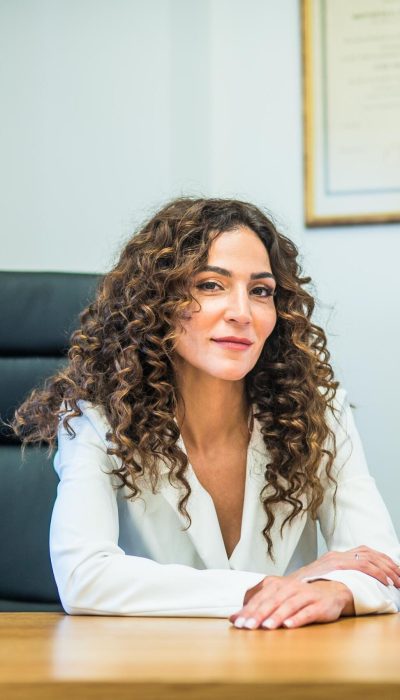
For me, a facelift is an act of respect – for the face, for your age, for your story.
I don’t aim for anything over-done, because the most successful facelift is the one nobody notices – except you.