Types of mole
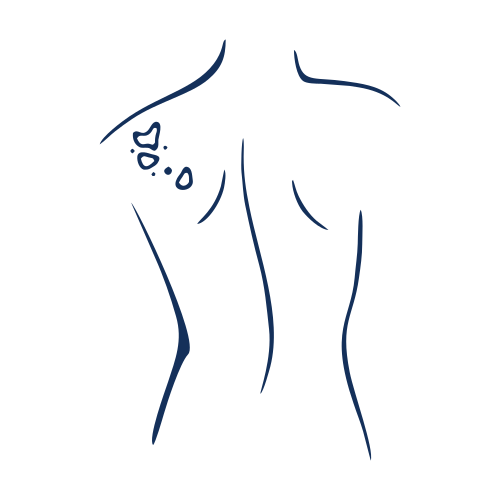
Depending on the type of mole, either removal or monitoring may be recommended. Ordinary moles are benign and harmless; they have clear borders, a round or oval shape, and can be flat or slightly raised.
Dysplastic or atypical moles have irregular borders, an asymmetrical shape and are often larger. Although they are benign, they can look like melanoma and are linked to a higher risk of becoming cancerous. In these cases, preventive removal and histological examination by a specialist pathologist are essential.
Is mole removal right for me?
Moles can be removed for cosmetic,
practical or preventive reasons.
- People with moles that affect their appearance or confidence.
- Moles in visible areas, such as the face or neck.
- Moles that get irritated or caught on clothing or with movement.
- Moles that change in size, shape or colour over time.
- Cases where a preventive check and biopsy are needed.
Mole removal: the process
Consultation
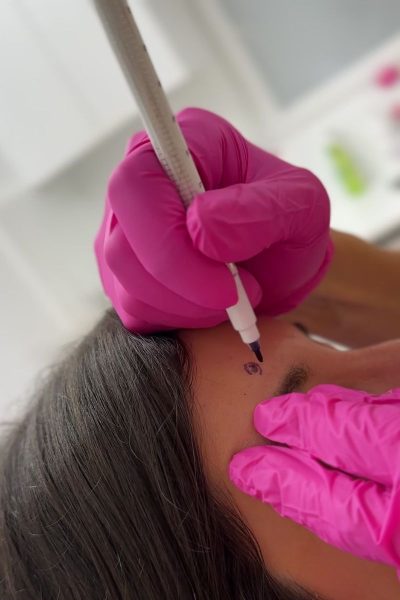
We examine the mole, its size, shape and position, and decide on the most suitable method of removal.
Preparation
The skin is carefully cleaned and a local anaesthetic is given, so you are comfortable throughout.
Treatment
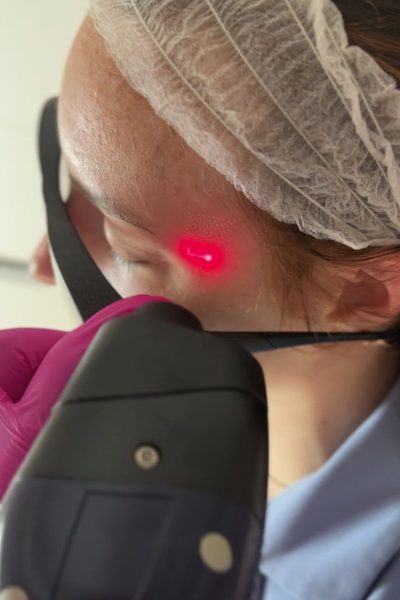
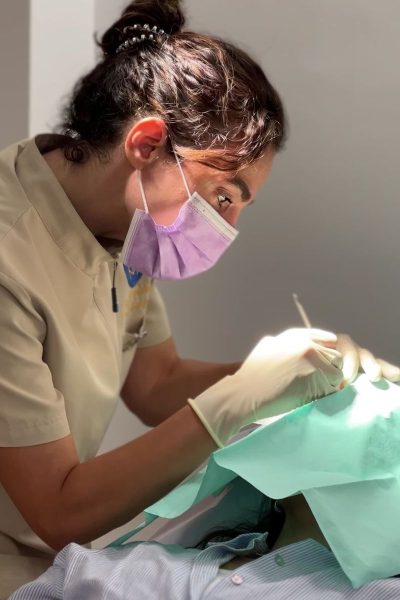
The mole is removed precisely with CO2 laser or surgically, depending on its features. The procedure takes 30–60 minutes.
Recovery
Soothing products and aftercare are applied. Stitches are removed where needed, and tissue is sent for histology.
Mole removal methods
Moles can be removed by two methods, always under local anaesthetic and with careful attention to safety:
- With CO2 laser, for benign moles that mainly affect appearance. The laser works precisely on the lesion while minimising damage to the surrounding tissue. Healing is usually quick and often leaves little visible mark. It is a gentle, minimally invasive method with a good cosmetic result.
- Surgically, by shave excision, when the mole has features considered suspicious. After removal, a careful plastic surgery closure is carried out to keep any mark as discreet as possible. The tissue is sent for histological examination as a precaution and for your peace of mind.
Benefits of CO2 laser mole removal
- Precise targeting of the lesion, while minimising damage to surrounding tissue.
- A tailored approach, adapted to the type, size and position of the mole.
- A well-tolerated procedure, under local anaesthetic and with no stitches.
- Quick recovery. Back to your daily routine within a few days.
- A long-lasting result, with a low chance of the mole coming back.
- Well suited to visible areas, where detail matters.
Benefits of surgical removal (shave excision)
- Complete removal of the mole and surrounding tissue, to treat it fully.
- Early detection of possible malignant change, with tissue sent for histology.
- A tailored approach depending on the position, size and type of mole.
- You won’t feel pain during the procedure, thanks to local anaesthetic and modern techniques that reduce discomfort.
- Careful cosmetic repair, so the area heals smoothly and naturally, with as little visible mark as possible.
- A long-lasting result, with a low chance of the lesion coming back.
- Quick healing with minimal care at home.
- A natural, balanced look, without changing the features of your face or body.
More about mole removal
AT A GLANCE
Treatment time
30–60 min, depending on size
Anaesthetic
Local (numbing cream)
How long results last
Long-lasting
Recovery
A few days
Sessions
1
Treatment areas
Whole body
Cost
From €150
Frequently asked questions
Will it leave a mark? Is it painful?
With laser treatment, recovery is quick and usually leaves little visible mark. With shave excision, a fine line remains that fades over time and looks like a natural skin crease. With both methods, local anaesthetic means you won’t feel pain during the procedure, with only mild discomfort in the first few days.
Could the mole come back?
The result is long-lasting and the chance of the mole coming back is low.
How long does healing take?
With laser treatment, healing is quick, with mild redness that settles within a few days. With surgical removal, it takes about 10–15 days until the stitches are removed, and a few months for the skin to return fully to its natural colour.
Can a mole become cancerous?
Ordinary moles are harmless. However, if they change shape, colour or size, they may become dysplastic and need preventive removal. In any case, regular checks with a doctor are the safest option. See also melanoma.
Is it dangerous to have a mole removed?
The idea that removing a mole can cause cancer is a myth. On the contrary, early removal helps prevent possible complications and protects your health.
My approach

In mole removal, my aim is not simply to remove a lesion, but to do so as safely, discreetly and neatly as possible, so that the result looks natural and blends in with the rest of your skin.
With experience in cosmetic and reconstructive surgery, I focus on detail and the right technique. My approach is to preserve the natural texture and balance of your skin, in a way that boosts your confidence and respects your appearance.